
Dong Thap Agriculture Strives to Accelerate Toward the Finish Line
(DTO) In the first six months of 2026, Dong Thap's agriculture, forestry, and fisheries sector continued to maintain positive growth, making vital contributions to the province's economic expansion and reaffirming its role as the economic cushion. Building on these achievements, the agricultural sector is focusing on addressing existing challenges to further drive growth.
POSITIVE GROWTH, BUT CHALLENGES REMAIN
According to the Statistics Office, Dong Thap's gross regional domestic product (GRDP) in the first six months of 2026 was estimated at VND 120.745 trillion at constant 2020 prices, representing a year-on-year increase of 7.14%.
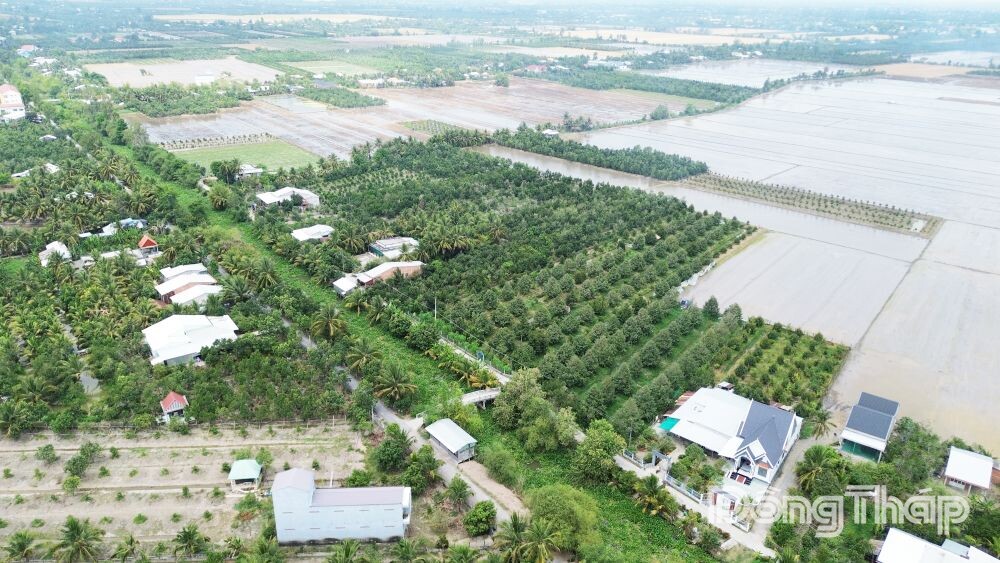
Within this total, the agriculture, forestry, and fisheries sector grew by 4.15% (compared to 3.96% in the same period last year). This sector continues to leverage its role as a critical backbone supporting other economic sectors, maintaining stable growth amid volatile agricultural markets.
In the early months of the year, the agricultural sector focused on synchronously deploying production restructuring solutions linked with the development of key sub-sectors.
Priorities included implementing the Project for One Million Hectares of High-Quality, Low-Emission Rice; accelerating high-tech application and digital transformation; and strengthening value-chain-based production linkages.
Concurrently, the sector proactively engaged in disease prevention and control; deployed response solutions against climate change, drought, and saltwater intrusion, while supporting trade promotion and expanding markets for agricultural products.
According to Le Ha Luan, Director of the Dong Thap Department of Agriculture and Environment, the implementation results of the sector's general growth targets in the first six months were basically met.
The sector's production value fulfilled the province's overall growth requirements. Although the area under rice cultivation declined, yield and output were not significantly impacted. Notably, recent growth benefited positively from contributions in fisheries and perennial crops.
However, it should be recognized that these results do not solely reflect short-term efforts by the sector or locality, but rather represent accumulated achievements from previous years.
For perennial crops, most of the current cultivated area was invested in and planted around four to five years ago and has now entered the harvesting stage.
Similarly, the fisheries sector sustained good growth momentum from 2022, 2023, and 2024, providing momentum for residents to expand farming areas. In addition, pangasius prices remaining consistently high for several consecutive years served as a stimulating factor for people to invest in production.
In terms of growth rate, if calculated at constant 2020 prices, the sector achieved an increase of more than 5%. However, if calculated at current market prices, it reached just over 3%. The primary cause stems from weak market demand and difficulties encountered in agricultural consumption.
According to Mr. Le Ha Luan, two major factors have impacted the actual growth figure. First, the quality and commercial worth of the province's agricultural products remain limited compared to consumer market requirements.
Second, the contamination of agricultural products with harmful substances, particularly cadmium, has significantly affected their marketability and selling prices.
Therefore, although output increased, the corresponding value addition remains disproportionate. This is considered a “bottleneck” that sub-sectors and localities must concentrate on removing in the coming period.
Furthermore, the agricultural sector faces multiple hurdles: falling prices for many agricultural commodities compared to the same period last year, causing production value to fall short of expectations; high prices of agricultural inputs; and adverse weather conditions with prolonged hot spells affecting cropping schedules and reducing the area under rice cultivation.
FOCUSING ON REMOVING BOTTLENECKS
To achieve the 2026 growth target, localities across the province are focusing on implementing solutions to boost agricultural production.
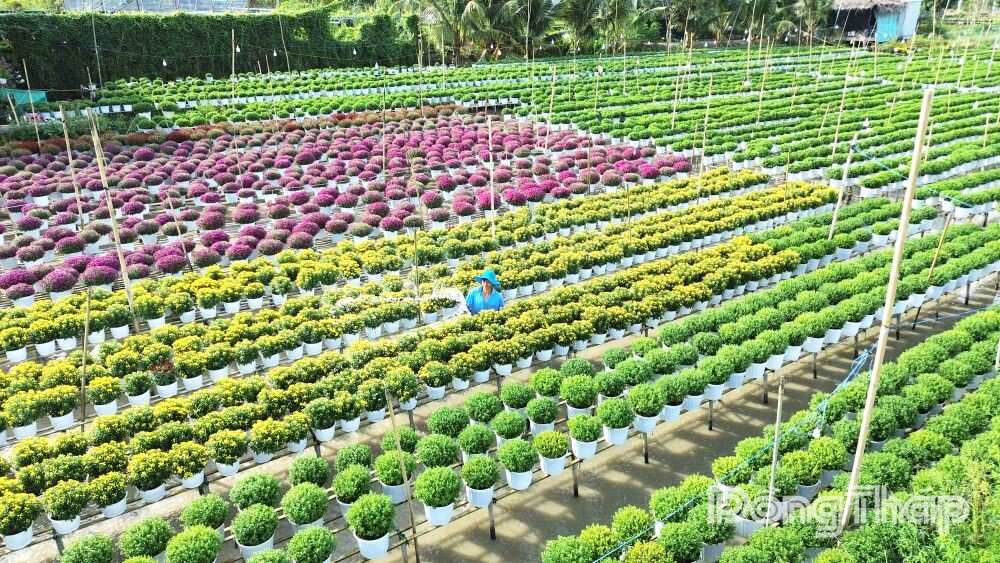
Sa Dec is well-known for its strengths in flower and ornamental plant production and trading in Dong Thap.
According to Mr. Nguyen Van Tam, Chairman of the Sa Dec Ward People's Committee, to further develop the Sa Dec Flower Village, the locality has organized meetings with flower and ornamental plant growers to identify their advantages and difficulties.
In addition, the Ward People's Committee has coordinated with relevant units to organize training courses, guiding growers on how to list their products on e-commerce platforms. This activity helps households access new sales channels, expand markets, and increase sales volume.
In early August, the locality plans to organize a supply-demand matching conference, creating opportunities for flower and ornamental plant growers to meet and connect directly with businesses, traders, and distributors, thereby expanding product outlets.
At the same time, the ward will continue organizing training classes on flower care techniques and pest control to enhance product quality and better satisfy market demand.
Agricultural production is a key strength of My Thanh Commune's economic development, with rice and fruit trees serving as the commune's two main crops. According to Mr. Dong Van Thao, Vice Chairman of the My Thanh Commune People's Committee, the local agriculture, forestry, and fisheries sector recorded positive growth in the first six months of the year.
In the remaining months of the year, the locality will continue to focus on guiding and supporting residents to develop the production of rice, jackfruit, durian, and other fruit crops.
Concurrently, the commune encourages short-term cash crop cultivation on rice paddies, while strengthening support for capital access and science-technology transfer to raise yields and product quality.
The locality also continues to invest in dike systems, sluice gates, and dams to protect production areas against natural disasters, with a focus on building support plans for enterprises and production/business households to maintain stable operations.
From the perspective of a specialized state management agency, during the final months of the year, the Department of Agriculture and Environment will proactively inspect production conditions and direct localities, particularly areas with large proportions of fruit trees, fisheries, and livestock.
These are the key sub-sectors contributing primarily to the sector's growth. According to plans, the sector strives to achieve a growth rate of approximately 4.7% by the end of the year, higher than the initial target of 4% - 4.5%. However, achieving this goal demands immense determination.
According to Mr. Le Ha Luan, to accomplish the full-year target, the sector has devised detailed plans and deployed them to communes and wards.
Calculations show that during the last six months of the year, it is necessary to produce an additional 1.6 to 1.85 million tonnes of rice to reach approximately 4 million tonnes for the whole year; 0.9 million tonnes of cash crops to reach about 1.7 million tonnes; 1.25 million tonnes of fruit to reach around 2.5 million tonnes; and 0.7 million tonnes of fishery products to achieve a cumulative total of about 1.2 million tonnes for the year.
To fulfill the agricultural sector's growth objectives, the most critical task in the remaining months of 2026 is to urgently resolve cadmium contamination in crops.
This issue has affected export values and trading activities for local residents. Therefore, the agricultural sector is coordinating with communes containing fruit-growing areas where cadmium-contaminated zones have been mapped out.
In parallel, the agricultural sector is deploying solutions to immobilize cadmium in the soil and limit cadmium uptake in crops to ensure output product quality, while concentrating on building Production Unit Codes (PUCs) for all export-oriented acreage.
"China's Order 280, effective from June 1, 2026, requires all types of fruit trees and agricultural products to possess PUCs to be eligible for export. According to estimates, to date, slightly over 60% of the province's production area has been granted PUCs.The agricultural sector is launching a 'campaign' regarding the creation of Production Unit Codes. Therefore, the agricultural sector hopes that localities will jointly respond to safeguard the interests of local farmers. Through building Production Unit Codes, farmers will standardize all production procedures and pesticide usage, thereby ensuring agricultural product quality," Mr. Le Ha Luan added.
By M. THANH
Translated by X.QUANG