

nce regarded as waste, rice straw was often burned in the fields, blanketing countryside villages with plumes of thick black smoke every harvest season. Today, however, across the Mekong Delta in general and Dong Thap Province in particular, this agricultural by-product is gradually turning into “brown gold” for farmers.
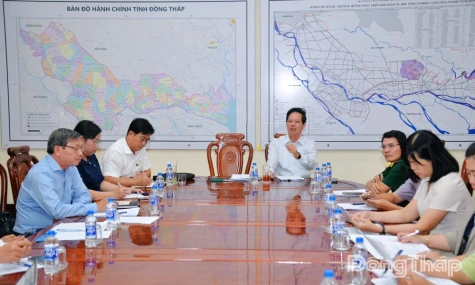
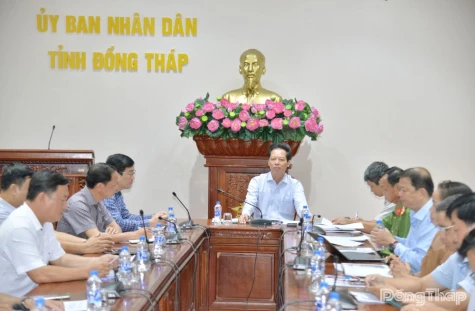
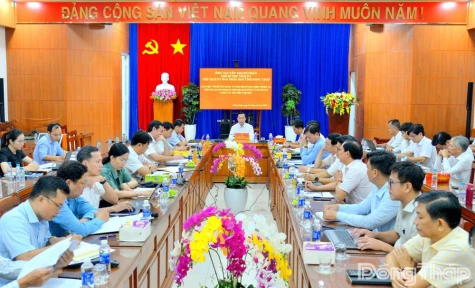
Mr. Pham Thanh Ngai, Chairman of the Dong Thap Provincial People’s Committee, chaired a working session with relevant departments and agencies to review detailed preparations for the 1st Dong Thap Fruit Festival 2026
To address this, the province is rolling out multi-pronged solutions to elevate product quality and proactively adapt to new regulations in import markets.
According to the Viet Nam Association of Seafood Exporters and Producers (VASEP), the seafood export turnover during the January-April period was estimated at 3.7 billion USD, up nearly 15% year-on-year.
The Dong Thap Provincial People’s Committee has issued a plan to implement traceability for agricultural, forestry, and aquatic products for the 2026-2030 period, with a vision to 2035.
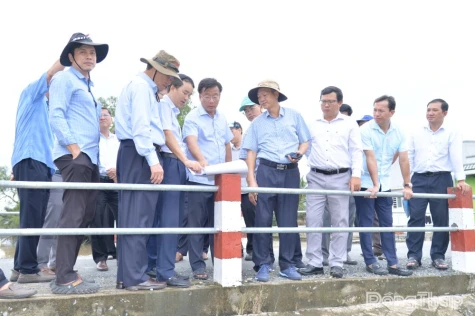
Vice Chairman of the Dong Thap Provincial People’s Committee Nguyen Phuoc Thien conducted a survey of projects in the eastern region, including: the installation of a raw water pumping station at the Nguyen Van Con sluice area (Vam Giong canal) and the raw water pipeline of Tien Giang Water Supply One Member Co., Ltd.; the Long Chanh landfill (Binh Xuan Ward); the embankment section from Huyen Chi Bridge to the Vam Giong canal intersection (the junction of Salicette Canal and Go Cong River); and Phase 2 of the Can Loc River embankment in Gia Thuan Commune.
Vice Chairman Nguyen Phuoc Thien surveys the installation site for the raw water pumping station at the Nguyen Van Con sluice area and the raw water pipeline route.