
Dong Thap Faces Human Resources Crunch Amid New Industrial Push
(DTO) Surging recruitment demand coupled with acute labor shortages highlights the critical human resources challenge in Dong Thap's industrial development. As the province plans to expand its network of industrial parks and industrial clusters through 2030, preparing the workforce now is considered a decisive factor in the success of its investment attraction strategy.
PROACTIVE PREPARATION
Many businesses across the province are aggressively advertising vacancies through both direct and online channels.
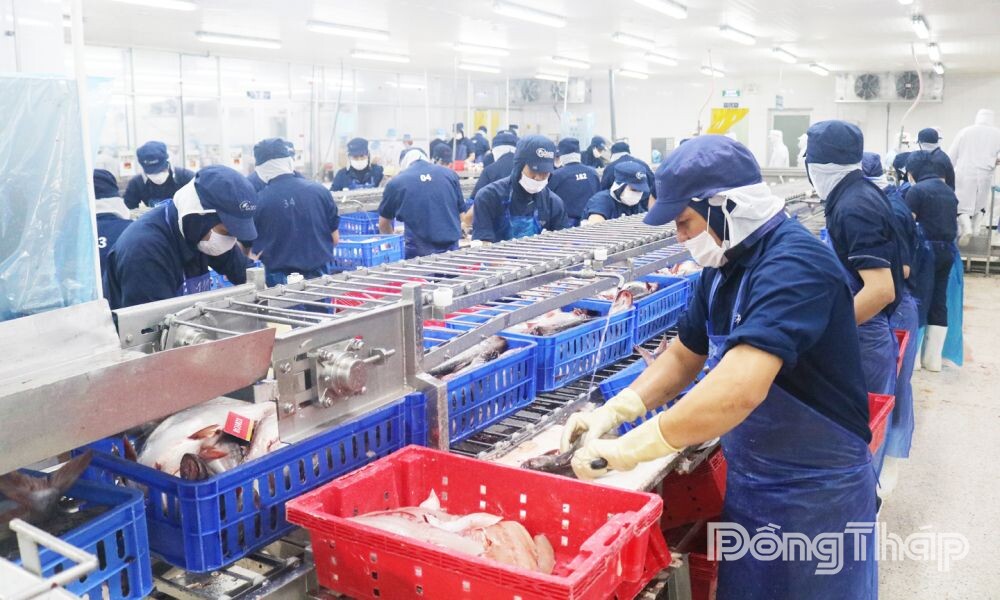
However, a considerable number of businesses are still struggling to recruit enough workers to meet production requirements.
This reality shows that, alongside the expansion of industrial parks (IPs) and industrial clusters (ICs), human resources must be secured well in advance.
Under the province's development blueprint, by 2030, Dong Thap will develop 18 additional IPs with a total area of about 4,912 hectares, including four IPs currently under construction and 14 IPs prioritized for investment attraction.
In addition, the province currently has 22 ICs in operation or under construction, while continuing to prioritize the expansion of another 19 ICs when conditions permit. This scale of development is expected to trigger a demand for tens of thousands of workers across various fields, ranging from unskilled laborers to skilled workers and highly qualified talent.
According to the Dong Thap Employment Service Center, in the first six months of 2026, a total of 346 businesses registered to recruit more than 22,000 positions, up 31.8% year on year.
Recruitment demand was concentrated mainly in IPs, ICs and large-scale manufacturing businesses. Notably, the number of workers businesses needed to recruit was more than twice the number of resignations during the same period.
This indicates that the province's labor market is no longer characterized by a shortage of jobs, but rather by an insufficient supply of workers who meet businesses' requirements.
According to the Dong Thap Employment Service Center, the labor supply-demand mismatch stems from various factors, including a declining young workforce due to low birth rates, the fact that student channeling toward vocational education has fallen short of expectations, and the tendency of many workers to move to major industrial centers in search of jobs offering higher incomes and better benefits.
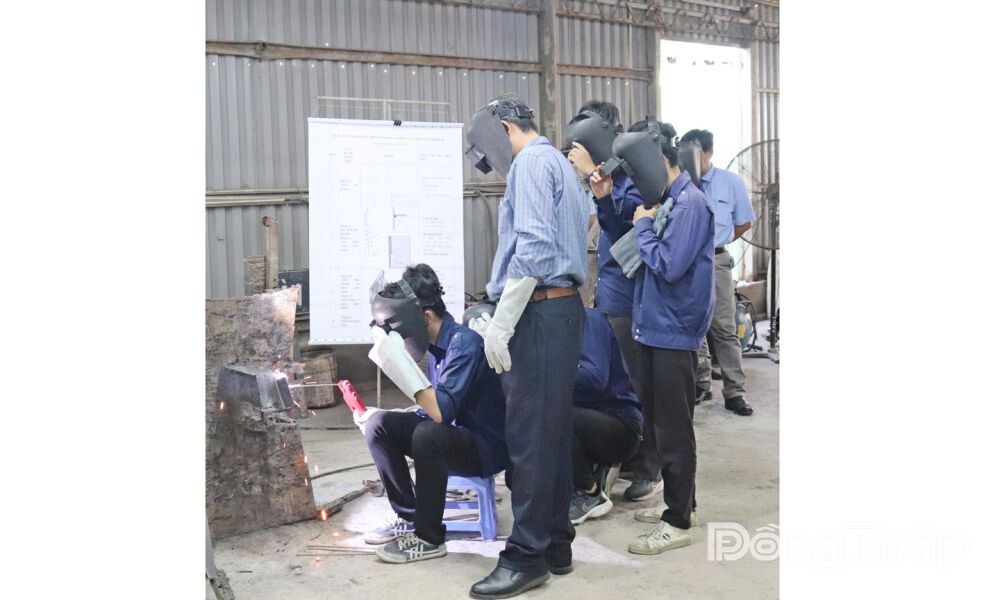
The challenge is not only one of quantity; the quality of the workforce is also a concern. Some workers do not yet meet requirements in terms of occupational skills, industrial discipline, and adaptability to modern production environments.
This is considered one of the primary “bottlenecks” affecting businesses' ability to recruit workers and the province's attractiveness to investors.
The situation at businesses shows that labor shortages are directly affecting their production expansion plans.
Mr. Le Vo Huu Hanh, Chairman of the Grassroots Trade Union of Freeview Industrial (Vietnam) Co., Ltd. at Tan Huong Industrial Park, said: “The company needs to recruit about 1,200 additional workers to ramp up production. However, after nearly two months of recruitment, the company has recruited only about 300 workers.”
According to Mr. Hanh, in addition to posting recruitment information on platforms such as Zalo, Facebook and its website, as well as through internal communications, the company has also coordinated with various organizations to seek workers, but the results have yet to meet expectations.
The labor shortage is forcing businesses to extend recruitment periods and placing greater pressure on them to meet production schedules. Against this backdrop, the company's management and grassroots trade union have urged the Provincial People's Committee and the Provincial Federation of Labor to roll out measures to support labor connections and attract workers, creating favorable conditions for businesses to maintain stable, long-term production.
A CONCERTED COMPREHENSIVE STRATEGY
To address the human resources puzzle in this new phase of industrial development, vocational training—alongside efforts in labor supply-demand matching—has been identified as a pivotal long-term solution.

Mr. Nguyen Quang Khai, Rector of Tien Giang Vocational College, said the school is aggressively shifting from supply-driven training to training tailored to actual labor market demand.
Based on surveys of businesses' recruitment needs, the institution is adjusting its enrollment scale and updating training programs, with priority given to technical fields. At the same time, it is pioneering a dual training model and expanding practical training on-site at businesses, enabling students to gain early exposure to production environments during their studies.
According to Mr. Khai, in addition to occupational skills, students are also equipped with digital skills, specialized foreign languages, professional industrial working styles, and teamwork competencies.
Businesses' participation in developing training programs and assessing occupational skills will help establish a customized, order-based training model, providing a technical workforce capable of meeting the development requirements of the province's industrial parks and industrial clusters.
Speaking at a dialogue between the Standing Committee of the Provincial Party Committee and union officials and members, Mr. Huynh Minh Tuan, Member of the Provincial Party Committee and Vice Chairman of the Provincial People's Committee, pointed out: “Attracting and retaining workers is a daunting task that requires synchronized, long-term solutions.
The Provincial People's Committee has assigned the Department of Home Affairs to coordinate with the Economic Zone Management Board, the Department of Industry and Trade, and vocational education institutions to review businesses' recruitment and training needs and proactively develop training plans suited to actual requirements.”
Vice Chairman Huynh Minh Tuan stressed that the planning and development of industrial parks and industrial clusters must be accompanied by preparations for human resources from the outset, ensuring that businesses have access to an adequate workforce the moment their projects become operational.
At the same time, businesses need to pay greater attention to developing competitive wage and welfare policies and creating a suitable working environment to enhance their ability to attract and retain workers, thereby contributing to sustainable production and business development.
To realize this goal, the Provincial People's Committee has identified human resource development as a top priority, aiming to raise the proportion of trained workers to 82.5% by 2030, including 43.5% holding degrees or certificates, while generating jobs for around 50,000 workers annually.
The province will also continue forecasting human resource needs, providing training based on businesses' requirements, and improving the effectiveness of labor supply-demand matching.
If infrastructure provides the foundation for industrial parks and industrial clusters, human resources are the decisive factor in determining a locality's competitiveness.
Close cooperation among the authorities, businesses, training institutions and trade union organizations will be the key to helping Dong Thap resolve its human resources shortage and lay a foundation for modern and sustainable industrial development.
BY LY OANH
Translated by X.QUANG