

500-DAY-AND-NIGHT CAMPAIGN TO ACCELERATE SEARCH, COLLECTION, AND IDENTIFICATION OF MARTYRS' REMAINS
Dong Thap: Upholding Urgency on the Journey to Restore Martyrs' Identities
(DTO) Every unidentified martyrs’ grave represents an unfinished story, behind which lies decades of waiting and longing by family members. Driven by the determination to swiftly restore names to unidentified fallen soldiers, Dong Thap is urgently accelerating the sampling of martyrs' remains across local cemeteries. This task demands not only precision and meticulousness but also carries profound significance as an act of deep gratitude.
From working tirelessly through sun and rain to the careful excavation, sampling, and restoration of each grave to its original condition, every stage is conducted with profound respect, high responsibility, and firm resolve. Following sampling, relevant dossiers are completed and specimens handed over for DNA testing; individual graves and cemetery grounds are also being rapidly renovated and restored to their original state, ensuring that the journey to restore identities to the fallen is sustained through concrete, practical, and heartfelt actions.
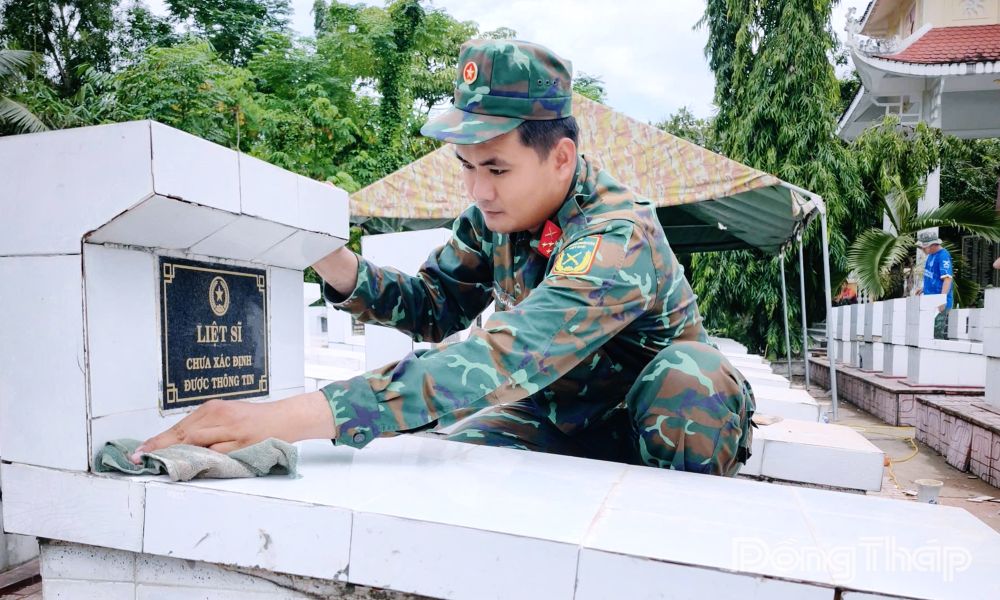
Senior Lieutenant Nguyen Chi Bao from the Policy Section of the Political Department under the Dong Thap Provincial Military Command shared that initially, the team consisted of 8 officers and soldiers. In response to demanding workloads and tight schedules during implementation, the force was reinforced, bringing the team size to approximately 20 members. Since the start of the campaign, the team has taken samples at over 15 local martyrs' cemeteries, collecting more than 2,000 biological specimens for DNA testing.
This represents a substantial workload under varying cemetery conditions and unpredictable weather—ranging from intense heat to heavy rainfall. Nevertheless, officers and soldiers consistently demonstrate high responsibility, overcoming hardships, utilizing all available time, and working almost without days off to maintain progress. Responding to emulation movements to accelerate execution and achieve early completion, every step in excavation and sampling is coordinated tightly and seamlessly. Every member clearly understands their duty, striving to execute assigned tasks effectively and contributing to the overall goals of the 500-Day-and-Night Campaign, Senior Lieutenant Nguyen Chi Bao added.
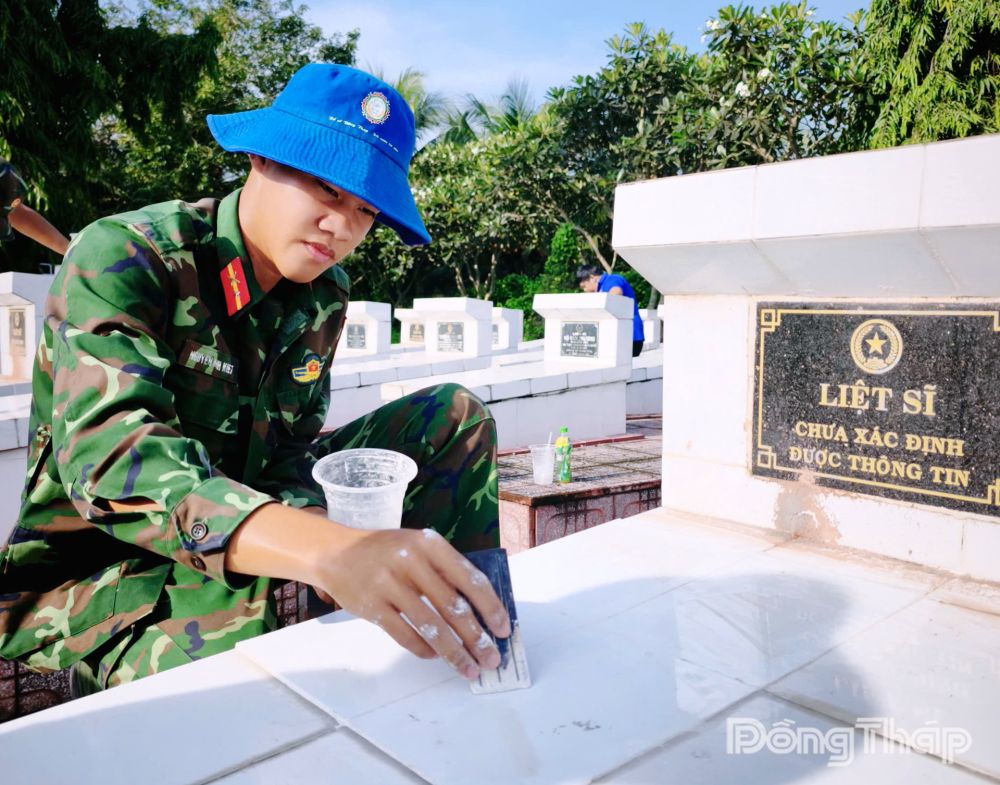
Since September 21, in My Tinh An Commune, excavation and sampling of martyrs' remains have been conducted across 3 cemeteries totaling 177 graves. Specifically, Hoa Tinh Martyrs' Cemetery contains 1 grave, Trung Hoa Martyrs' Cemetery 99 graves, My Tinh An Martyrs' Cemetery 77 graves, and Tan Binh Thanh Martyrs' Cemetery 15 graves.
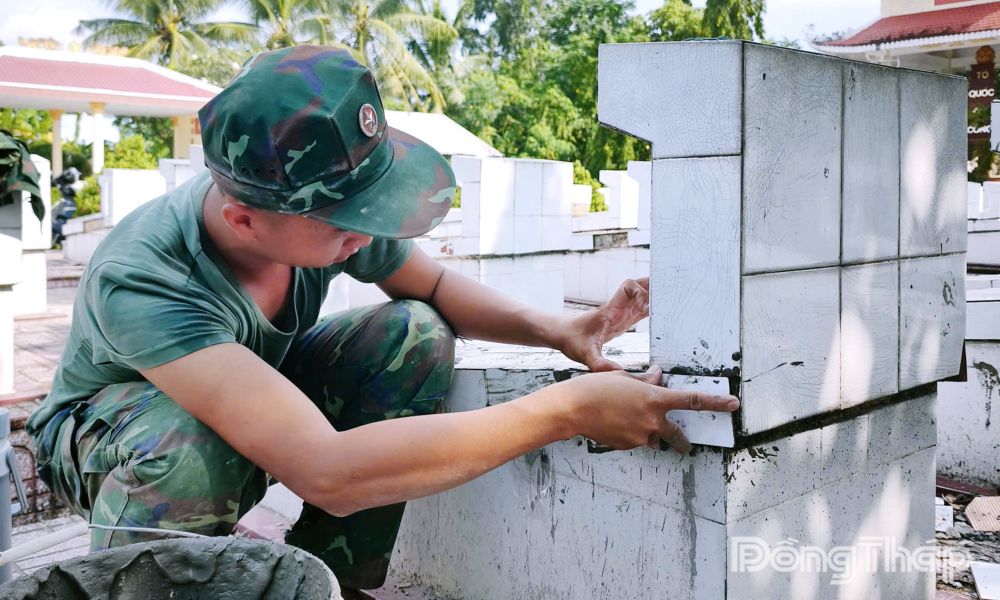
At Trung Hoa Martyrs' Cemetery in My Tinh An Commune, as soon as the weather cleared, officers and soldiers meticulously cut tiles and pointed grout lines to restore integrity to each grave. Just days earlier, these same soldiers were digging, chiseling, and drilling to excavate and sample unidentified remains. Now, their work transitions to restoring and beautifying every grave following sample collection.
Private First Class Bui Hoai Phuong shared that the team carefully selects tiles matching the original color of each grave. They then take precise measurements and trim tiles to fit exact angles and dimensions. During tiling, grout lines are laid neatly and squarely along edges. Everyone strives to work with extreme care to restore each grave to its original intact, dignified state.
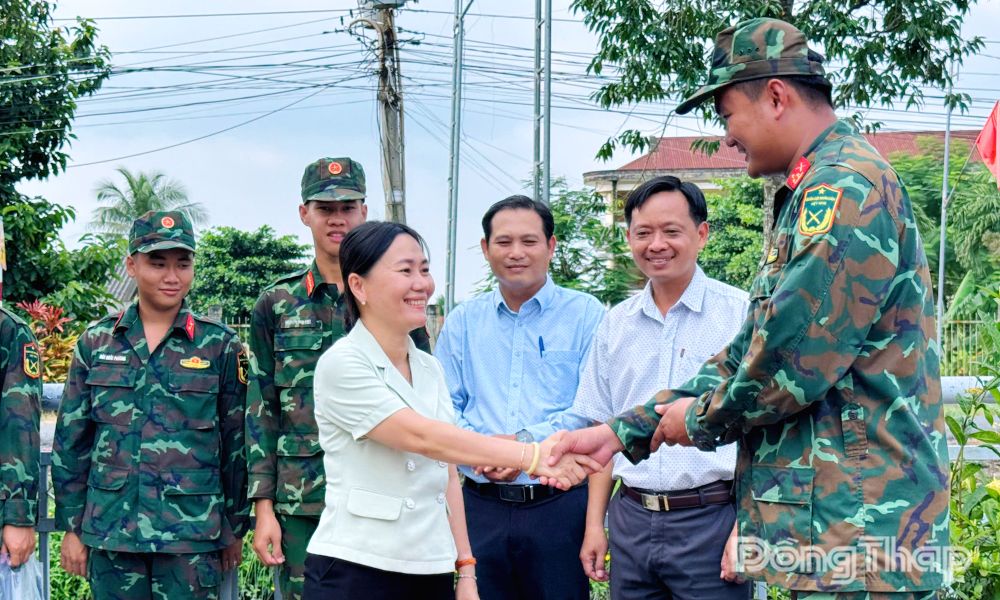
Accompanying the team throughout this journey is the shared support of local residents and benevolent donors. Whenever the squad sets up station, local visits, encouragement, and gifts provide added motivation to complete the mission successfully.
Ms. Dang Thi Minh Khai, Chairwoman of the My Tinh An Commune People's Committee, noted that during the 500-Day-and-Night Campaign, My Tinh An Commune received active support from the Provincial Military Command force in searching for and sampling fallen heroes' remains. Officers and soldiers worked enthusiastically and responsibly, enabling the locality to reach its scheduled milestones early. Local authorities visited and encouraged the forces on duty, while mobilizing residents to offer support, encouragement, and essential provisions, creating favorable conditions for team members to maintain health and complete their duties. Regarding site restoration post-search, the task force executed its responsibilities thoroughly, maintaining progress with clean and careful workmanship. Upon task completion, search areas were backfilled, leveled, and substantially restored to their original condition.
Currently, Dong Thap Province is accelerating the 500-Day-and-Night Campaign, aiming to complete sampling across 30 martyrs' cemeteries statewide prior to April 30, 2027. Determined to finish 6 months ahead of the Central Government's schedule, the entire political system has engaged synchronously and decisively. While progress is expedited, requirements regarding quality, quantity, and strict procedures remain top priorities.
As of October 1, operational forces have deployed excavations across 30 out of 30 martyrs' cemeteries, completing sampling at 29 of them, with active sampling ongoing at Go Cong Tay Martyrs' Cemetery. A total of 12,188 unidentified graves have been excavated and sampled. Among these, 3,216 samples have been delivered to the DNA Testing Center under the Institute of Biotechnology for analysis. On October 5, an additional 4,510 samples are scheduled for transport to Hanoi for testing.
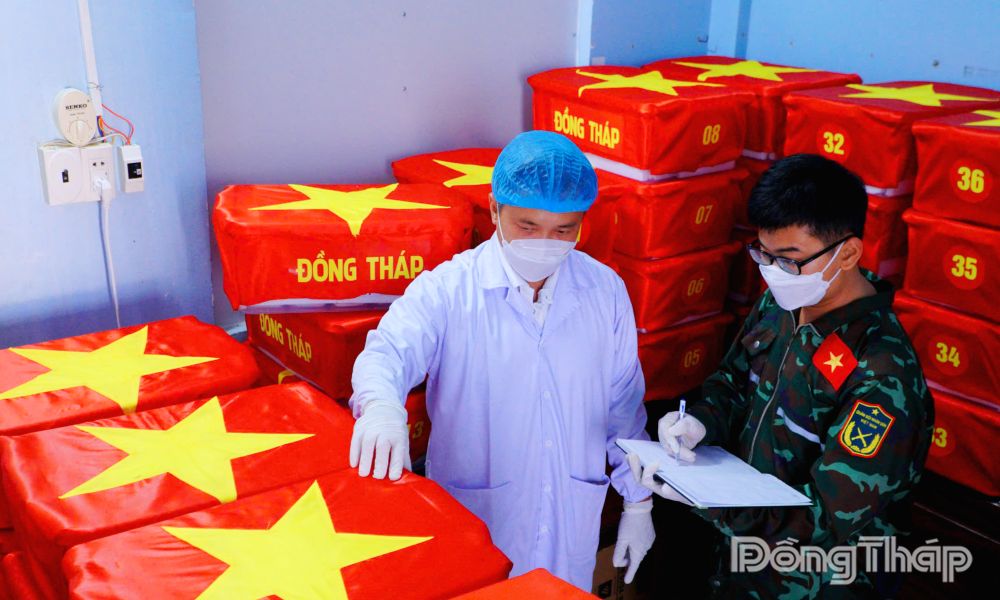
Senior Lieutenant Colonel Nguyen Tuan Anh, Deputy Head of the Political Department at the Dong Thap Provincial Military Command, stated that to date, sampling has achieved over 99% of targeted graves for this phase. The force strives to complete sampling at all 30 martyrs' cemeteries across the province. Afterwards, efforts will focus on rebuilding graves to their original state and handing over remains specimens for DNA testing to identify martyrs.
When initiating the campaign, personnel experienced initial unfamiliarity due to the novel nature and high technical demands of the work, alongside a massive workload. However, through continuous execution, experience was gathered to establish appropriate methods—from information verification to excavation techniques—ensuring convenience, speed, accuracy, and adherence to procedures. Crucially, site restoration is conducted concurrently with excavation to shorten timelines, reduce labor, and boost productivity. Learning through practical execution enabled the forces to progressively cut task completion times. For restoring graves to their original condition, the goal is to ensure that they are at least as level and attractive as, or even better than, before excavation. The restoration of each grave is carried out with extreme care, caution, and precision to achieve the best possible condition, Senior Lieutenant Colonel Nguyen Tuan Anh added.
By HA NAM
Translated by X.QUANG