

Groundbreaking for Ho Chi Minh City - Trung Luong - My Thuan Expressway Expansion
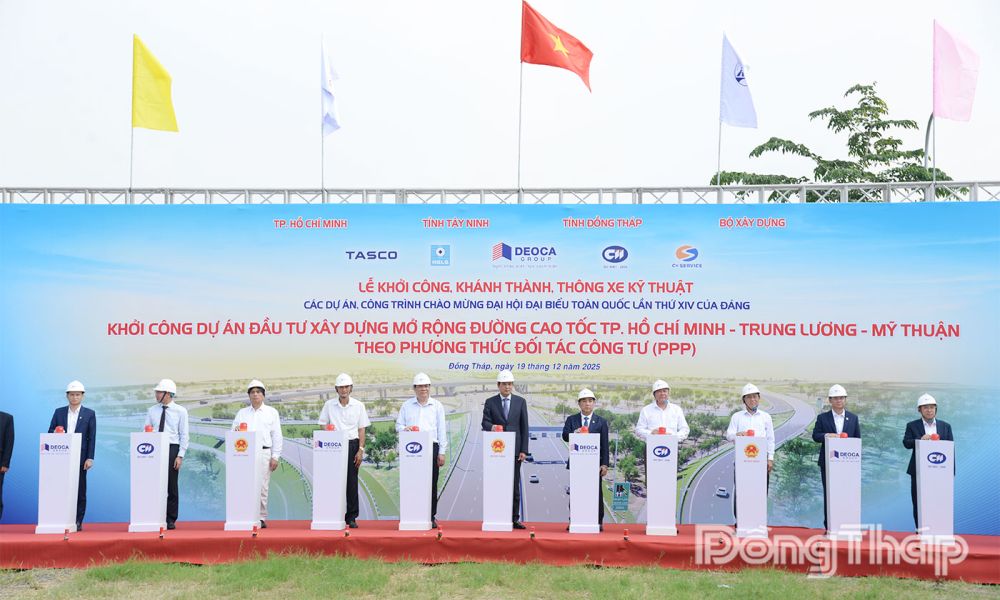
(DTO) On the morning of December 19, in Dong Thap Province, the Ministry of Construction, in coordination with an investor joint venture, held a groundbreaking ceremony for the expansion of the Ho Chi Minh City - Trung Luong - My Thuan Expressway. The project is being implemented under the Public - Private Partnership (PPP) model.
The ceremony was connected via a live broadcast to multiple sites across the country to mark the commencement, inauguration, and technical opening of key infrastructure projects celebrating the 14th National Party Congress.
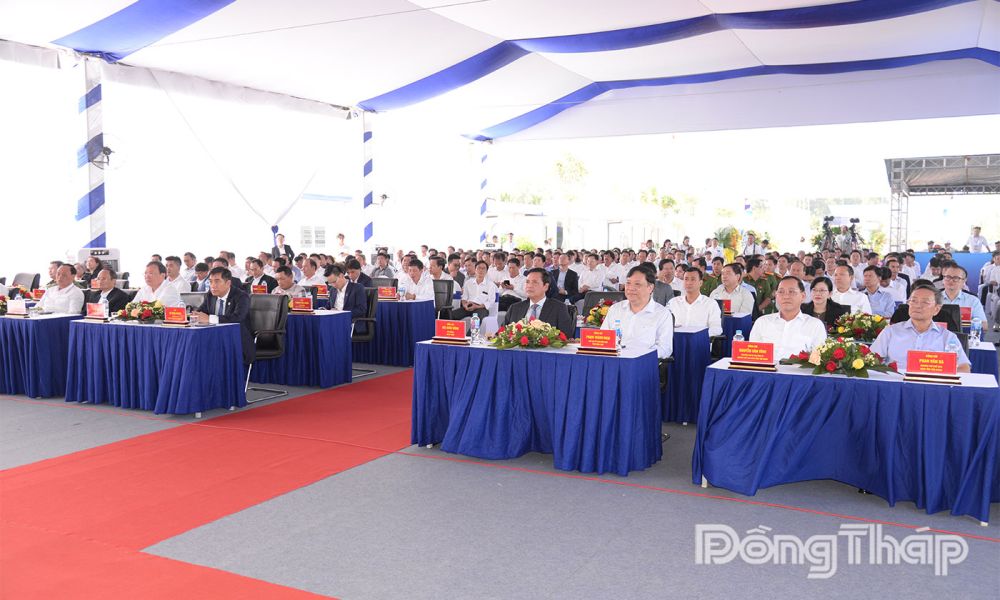
The event was attended by Mr. Bui Xuan Dung, Deputy Minister of Construction; Mr. Pham Thanh Ngai, Chairman of the Dong Thap Provincial People's Committee; and Mr. Le Van Han, Chairman of the Tay Ninh Provincial People's Committee, among other officials.
With a total investment of over 36.172 trillion VND, the project spans more than 96 km through Ho Chi Minh City, Tay Ninh, and Dong Thap. It is executed under a Build-Operate-Transfer (BOT) contract, utilizing 100% private sector capital. Notably, this is the largest transport BOT project in Vietnam to date in terms of capital mobilized by private enterprises.

The investor joint venture includes Deo Ca Group, Ho Chi Minh City Infrastructure Investment JSC, Tasco JSC, Hoang Long Investment and Construction Corp, and CII Service and Investment One Member Co., Ltd.
The project’s starting point is the Cho Dem intersection in Ho Chi Minh City, and it ends at the northern foot of the My Thuan 2 Bridge in Dong Thap Province.
Specifically, the Ho Chi Minh City - Trung Luong section will be expanded to 8 lanes with a design speed of 120 km/h. The Trung Luong - My Thuan section and the stretch from the An Thai Trung intersection to the northern foot of the My Thuan 2 Bridge will be fully developed into 6 lanes with a design speed of 100 km/h.
Along with road widening, the Ho Chi Minh City - Trung Luong - My Thuan expressway will be equipped with a synchronous Intelligent Transport System (ITS), modern rest areas, and advanced toll stations, aiming for international expressway standards. The project is expected to be operational by 2028.
Developing transport infrastructure in the Southwestern region presents unique challenges, including crisscrossing rivers, weak soil, complex hydro-geological conditions, and a shortage of materials, which not all investors have sufficient experience to handle.
Expanding more than 96 km of the route is even more difficult as construction must take place while maintaining traffic flow. This places high demands on safety, traffic regulation, and minimizing impact on residents' lives.
To address this, Deo Ca Group has developed a "rolling" construction method, using barriers to completely separate the site and completing the project lane by lane. As new sections open, traffic is diverted to allow work on the remaining parts. This approach ensures both progress and safety for the existing route while minimizing the impact on residents.
For this project, Deo Ca Group is collaborating with the CREEC—a leading Chinese enterprise in consultancy and design—to implement BIM design. Digital technology is also being applied in construction management, quality control, and the operation of the entire project.
Furthermore, the investor joint venture is partnering with universities and colleges to provide technology-applied training for workers and engineers.
Notably, during implementation, the project will publicly announce the execution plan and the responsibilities of each stakeholder. A transparent monitoring mechanism, including a "countdown clock," has been established for the public and authorities to track progress.
The guiding spirit throughout is: "To clear the physical road, we must first clear the road of responsibility." Currently, the project management office, workspaces, and accommodations for workers have been well-invested. Machinery and equipment have been fully gathered by the investor, ready to commence work immediately after the ceremony.
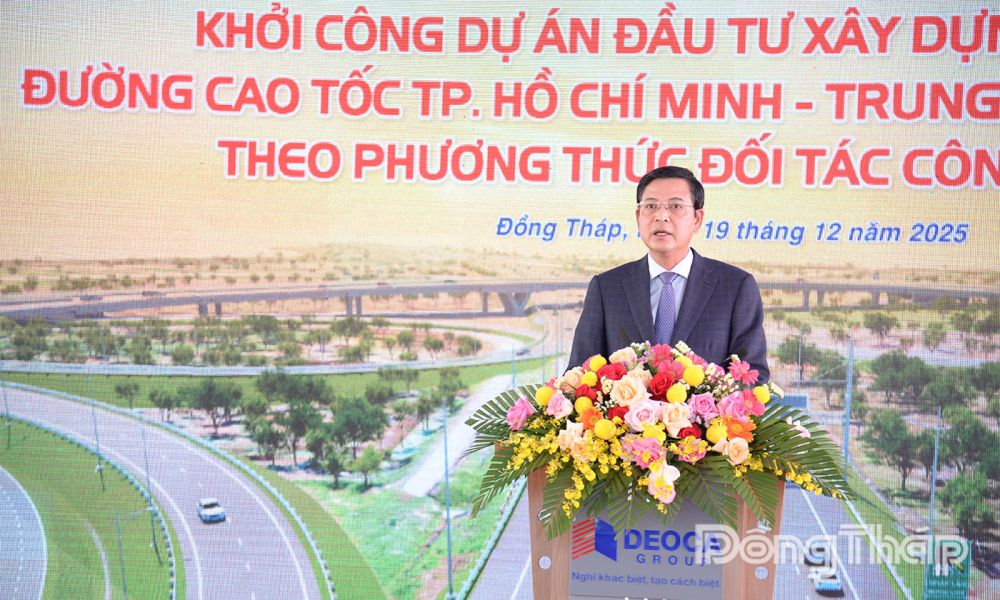
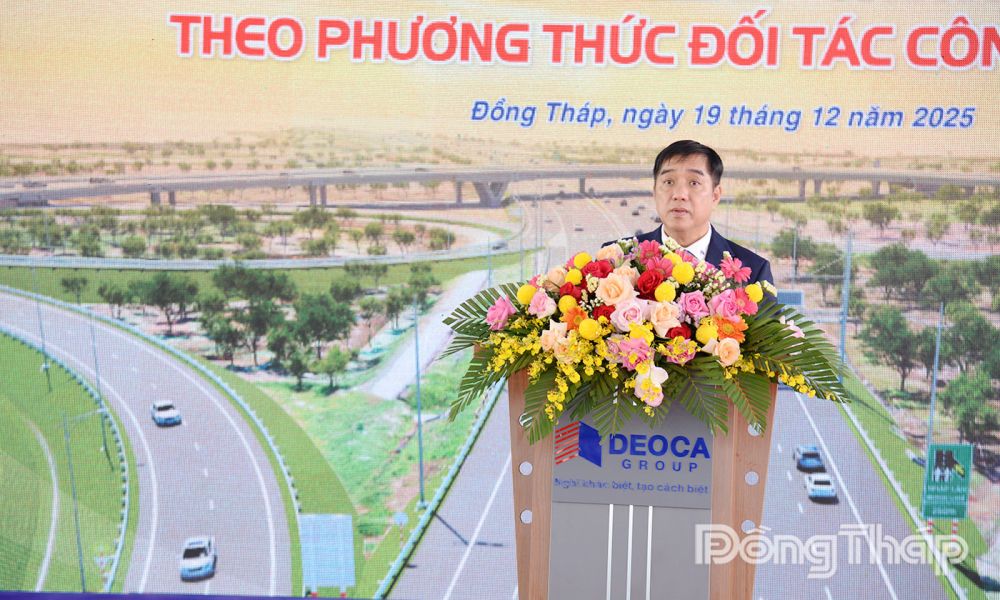
At the ceremony, Mr. Ho Minh Hoang, Chairman of Deo Ca Group, stated that to ensure the project is completed on schedule and meets the quality expectations of the Government and the people, the joint venture commits to mobilizing maximum resources and maintaining professional and transparent management to complete the entire route by 2028.
Speaking at the ceremony, Deputy Minister of Construction Bui Xuan Dung emphasized that to ensure the project meets requirements for quality, progress, safety, and investment efficiency, the Ministry of Construction requests the People's Committees of Ho Chi Minh City, Tay Ninh, and Dong Thap to continue their support in site clearance.

This is a decisive factor in ensuring the project's progress and efficiency. He also requested the provinces to resolve procedures related to material mines and waste disposal sites and ensure security and traffic safety during construction.
The investor must fulfill all obligations and responsibilities stipulated in the contract, maintaining strict management over quality, safety, and environmental hygiene throughout the project's implementation.
Simultaneously, contractors and consultants must develop detailed construction schedules and ensure that traffic on the existing route remains unaffected.
Contractors, supervisors, and designers must identify this as a key project with special significance for the Southwestern provinces.
Construction contractors, supervision consultants, and design consultants must clearly identify this as a key project with special significance for the provinces in the Southwestern region.
Particularly, it is essential to focus on mobilizing modern machinery and equipment, along with an experienced workforce, to implement the project; ensuring strict compliance with technical standards and regulations, occupational safety, traffic safety, and environmental hygiene to meet the completion schedule.
Deputy Minister Bui Xuan Dung requested the Vietnam Roads Administration and specialized agencies of the Ministry of Construction to strengthen inspection and supervision throughout the construction process.
By MINH THANH
Translated by XUAN QUANG