
Team K91: Continuing the Mission to Bring Fallen Soldiers Home
(DTO) During the 2026-2027 dry season, Team K91, under the Political Department of the Dong Thap Provincial Military Command, will once again head to Cambodia to search for and repatriate the remains of Vietnamese volunteer soldiers and military experts who died during the wars.
Ahead lie vast and challenging areas. Behind them are the hopes of the families of fallen soldiers. For the officers and soldiers of Team K91, that is the motivation to continue searching for their comrades who remain in the land where they fell.
EVERY TIP IS A CHANCE TO BRING A FALLEN SOLDIER HOME
For many years, in former battlefields across Cambodia’s Prey Veng and Pursat provinces, generations of Team K91 officers and soldiers have overcome hardships and persevered in searching for and recovering the remains of fallen Vietnamese soldiers. The work has become increasingly difficult as information sources dwindle, witnesses grow fewer, and former battlefields have undergone major changes.
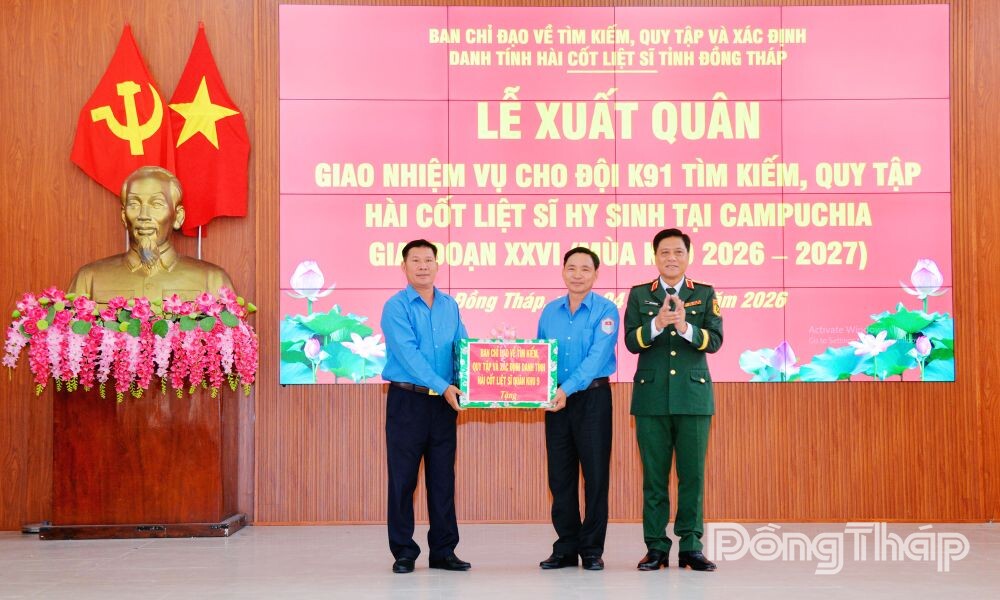
Huynh Minh Tuan, Vice Chairman of the Dong Thap Provincial People’s Committee and Head of the Provincial Steering Committee 515 for the search, recovery and identification of fallen soldiers’ remains, said that over the years of carrying out missions in Cambodia, generations of Team K91 officers and soldiers have recovered more than 2,100 sets of remains and brought them back to their homeland. As part of the “500-Day-and-Night Campaign to Intensify the Search, Recovery and Identification of Fallen Soldiers’ Remains,” as of early September 2026, Team K91 had recovered an additional 47 sets of remains in Cambodia and 109 in Vietnam. These results reflect the team’s perseverance, sense of responsibility and deep gratitude, fulfilling the hopes of countless families, relatives and comrades of the fallen.
Every recovery is the result of collective effort. From receiving information and reviewing records to cross-checking data and conducting field surveys, every step requires care and accuracy. In many cases, the only information is the account of an elderly witness or a few scant traces left by the war. Team K91 officers and soldiers have taken proactive and creative approaches, drawing on valuable experience in reviewing, gathering and cross-checking information, as well as conducting field surveys.
Marking the 80th anniversary of War Invalids and Martyrs’ Day, the need to intensify the search and recovery of fallen soldiers’ remains has become increasingly urgent. According to Vice Chairman Huynh Minh Tuan, the more time passes, the greater the challenges. Therefore, the information received must be valued, every trace carefully examined and every area where remains may still be found thoroughly surveyed, with the highest sense of responsibility to history and the people. |
Vice Chairman Huynh Minh Tuan said that given these challenges, Team K91 officers and soldiers must take a proactive, hands-on approach in every locality, village and community, meeting witnesses, elderly residents and respected community members to gather and verify information. Field searches must be conducted scientifically, carefully, and safely, while the handling and documentation of artifacts and remains must strictly comply with regulations. As time passes, witnesses become fewer and local areas continue to change. Without proactively gathering, verifying and consolidating information from different sources, opportunities to locate the remains will become increasingly limited. The team follows the principle: “As long as there is information, we will verify it; as long as there are traces, we will keep searching; and as long as fallen soldiers have not returned home, the mission will not stop.” This principle has translated into a shift from “waiting for information” to “proactively generating information.” Rather than simply receiving information provided to them, search teams actively visit local communities, meet witnesses and survey every area where the remains of fallen soldiers may still be found.
During the 2026-2027 dry season, Team K91 will continue deploying personnel in Prey Veng and Pursat provinces. Under the plan, the team will establish two search units. In Prey Veng, personnel will operate across nine districts, 36 communes and 44 locations. In Pursat, they will cover four districts, eight communes and eight locations. The workload is substantial, and the area is extensive, while conditions for carrying out the mission remain difficult. In preparation for the deployment, the Dong Thap Provincial Military Command organized political and ideological training to help officers and soldiers gain a deeper understanding of the mission’s political and humanitarian significance.
Colonel Tran Van Hien, Deputy Political Commissar of the Dong Thap Provincial Military Command, said the unit had proactively coordinated with specialized committees, working teams, local authorities, armed forces and residents in Prey Veng and Pursat to agree on the areas, tasks and methods of coordination. The unit has also reviewed and strengthened its organizational structure, assigned personnel according to mission requirements, and clearly allocated responsibilities to each team to ensure all stages of the mission are carried out in a coordinated manner.
NURTURING BONDS OF FRIENDSHIP THROUGH EVERY SEARCH
Searching for and recovering the remains of fallen Vietnamese soldiers in Cambodia is a special mission with both political significance and profound humanitarian value. During their missions, Team K91 not only works with Cambodian authorities to verify information and survey areas, but also places great emphasis on community outreach and maintaining close ties with local residents.
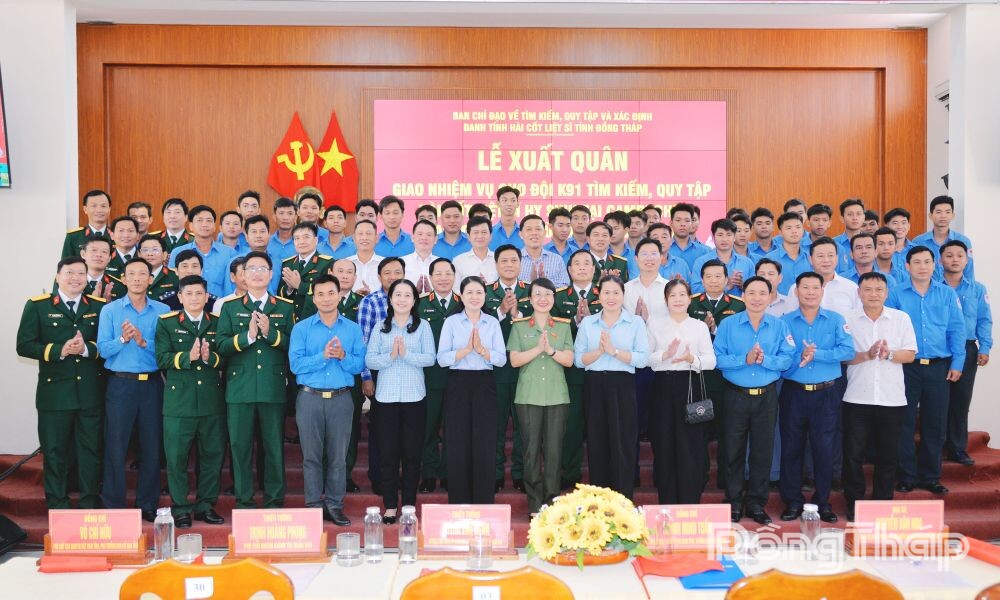
Vice Chairman Huynh Minh Tuan called on every Team K91 officer and soldier serving in Cambodia to be an “ambassador” who conveys the noble image of “Uncle Ho’s Soldiers” and the sincere sentiments of the Vietnamese people. They must strictly observe Vietnamese laws, military discipline and regulations on external relations; respect the customs, traditions and religious practices of the host country; and carry out community outreach through practical actions. Experience over the years has shown that the cooperation and support of Cambodian authorities and local residents are crucial to the search and recovery efforts. Information provided by local people is received and cross-checked by Team K91, followed by field surveys to gradually identify areas where the remains of fallen soldiers may still be found.
However, a great deal of work remains ahead. Under the target of the “500-Day-and-Night Campaign,” Dong Thap Province has been tasked with searching for and recovering 370 sets of fallen soldiers’ remains. To date, Team K91 has recovered 156 sets, including 47 in Cambodia and 109 in Dong Thap Province. Of these, 68 have been laid to rest at Tam Nong Martyrs’ Cemetery, while 88 are being preserved and stored by Team K91. For Team K91 officers and soldiers, every set of remains recovered means another soldier has returned home and another family has a chance to bring decades of waiting to an end.
Senior Colonel Vo Thanh Dan, Commander of Team K91, said that behind every piece of information and every site to be surveyed are the hopes and expectations of martyrs’ families. Behind every mission is the desire to bring more fallen soldiers back to their homeland. For every Team K91 officer and soldier, this is not simply an assigned task, but also a sacred responsibility to those who sacrificed their lives for the independence and freedom of the nation.
Before setting out, Team K91 reaffirmed its commitment to solidarity, strict discipline, overcoming difficulties, and a proactive and responsible approach to the mission. The team pledged to value the information they receive, carefully survey every area and thoroughly verify every piece of information. At the same time, its members will uphold the qualities of “Uncle Ho’s Soldiers,” strictly observe the laws of the host country and respect the customs and traditions of the Cambodian people.
To ensure the mission achieves the best possible results, the Provincial Steering Committee 515 has also asked the Dong Thap Provincial Military Command, the committee’s standing body, to proactively monitor developments and promptly address difficulties; ensure adequate personnel, vehicles, supplies and equipment; and take care of the officers’ and soldiers’ living conditions, health and morale. The command is also tasked with strengthening coordination with relevant agencies in Dong Thap and Cambodia to address emerging issues, while continuing to step up communications and outreach to encourage war veterans, martyrs’ families and local residents to provide information.
By HA NAM
Translated by ANH DUC